Kitchen

Your Guide to Kitchen Island Lighting

A kitchen renovation may be on your list of want-to-do projects for your home. But if you’ve decided to wait a few more years to take on such a big project, there are easy updates you can do right now to completely transform your kitchen. One of those updates being your kitchen island lighting. Updating your kitchen island lighting can give your kitchen a fresh look without having to rip out cabinets. I’m sharing your guide to kitchen island lighting with pendants.

If you don’t need to update your kitchen lighting right now, updating your dining room lighting is also an excellent way to give your home a fresh new look without extensive renovations. Check out my post on dining room light fixtures HERE.

Your Guide to Kitchen Island Lighting
Tips for Island Kitchen Pendant Placement
your guide to kitchen island lighting

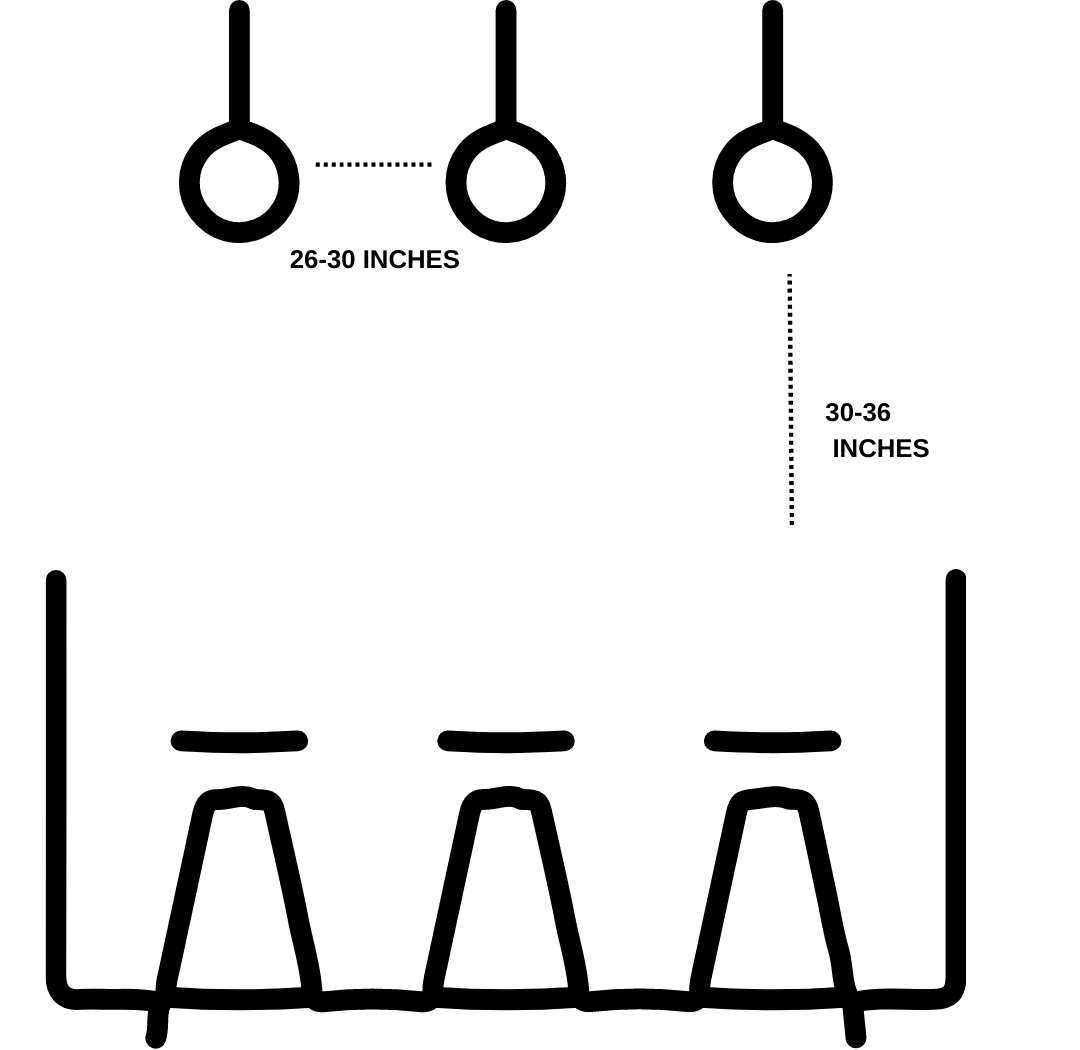
There’s actually a method to the madness when it comes to hanging pendants over your island. You want to make sure they’re centered with the island, the right height from the countertops and spaced accurately apart.

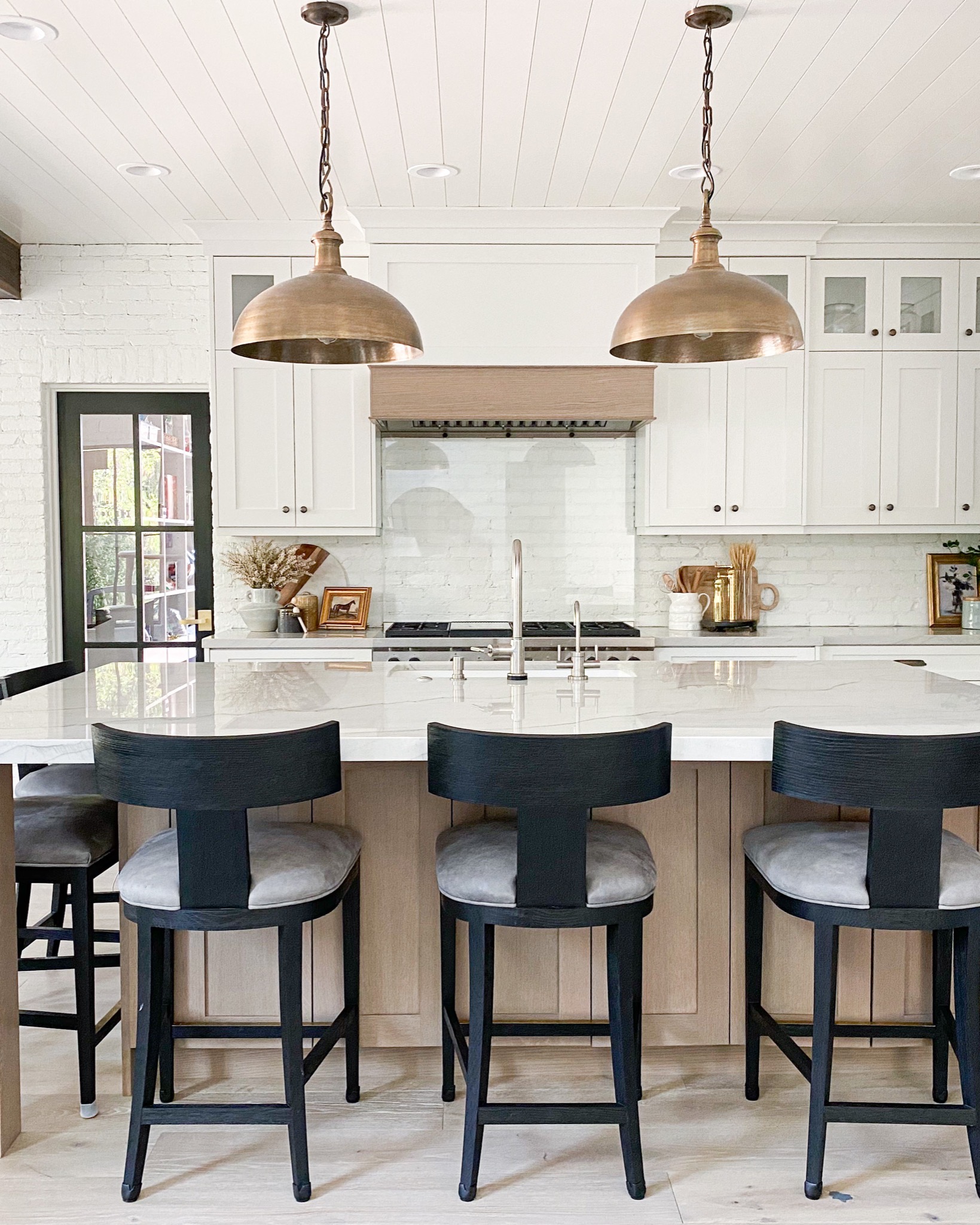
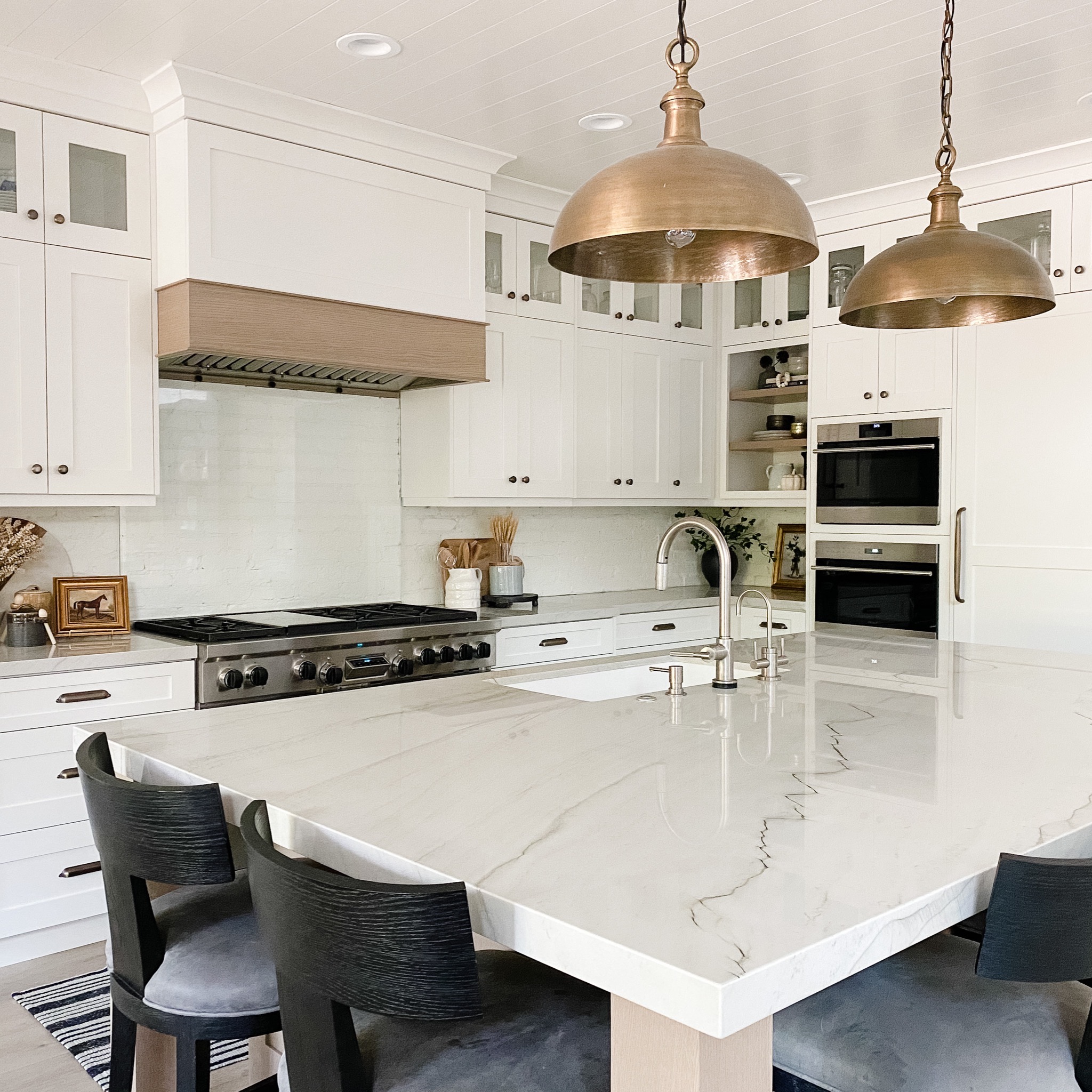
When we were designing our kitchen, I wanted the range of our stove to be in the middle of our two pendants when you were looking into the kitchen.

Here are some tips to keep in mind when hanging pendants above your island:

  • There should be 30″-36″ between the bottom of your pendants and your countertops. My husband is 6’1″, so we hung ours at 36″.
  • The distance between your pendants should be at least the same diameter for each pendant. For example, my pendants in our kitchen are 20″ in diameter and the space I have in between them is 22″.
  • There should be at least 6″-10″ to the edge of your countertop on both sides.
  • When you’re measuring your light fixture, you want to measure from the ceiling mount to the bottom of the pendant.

With those measurements in mind, you can then decide if your kitchen island will need two, three or more pendants. Here’s a reel I created to explain these measurements.
your guide to kitchen island lighting

Deciding on the Style of Pendant

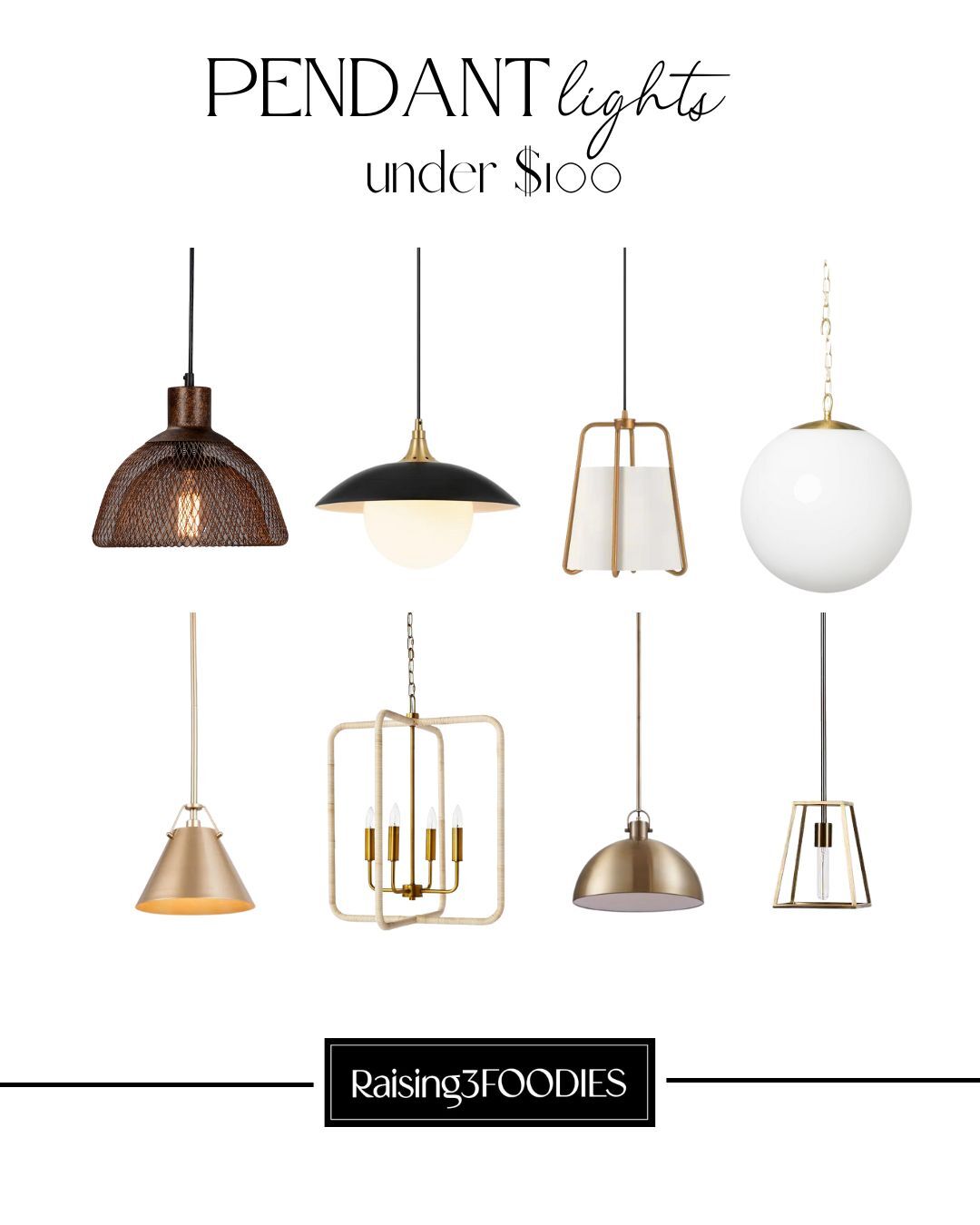
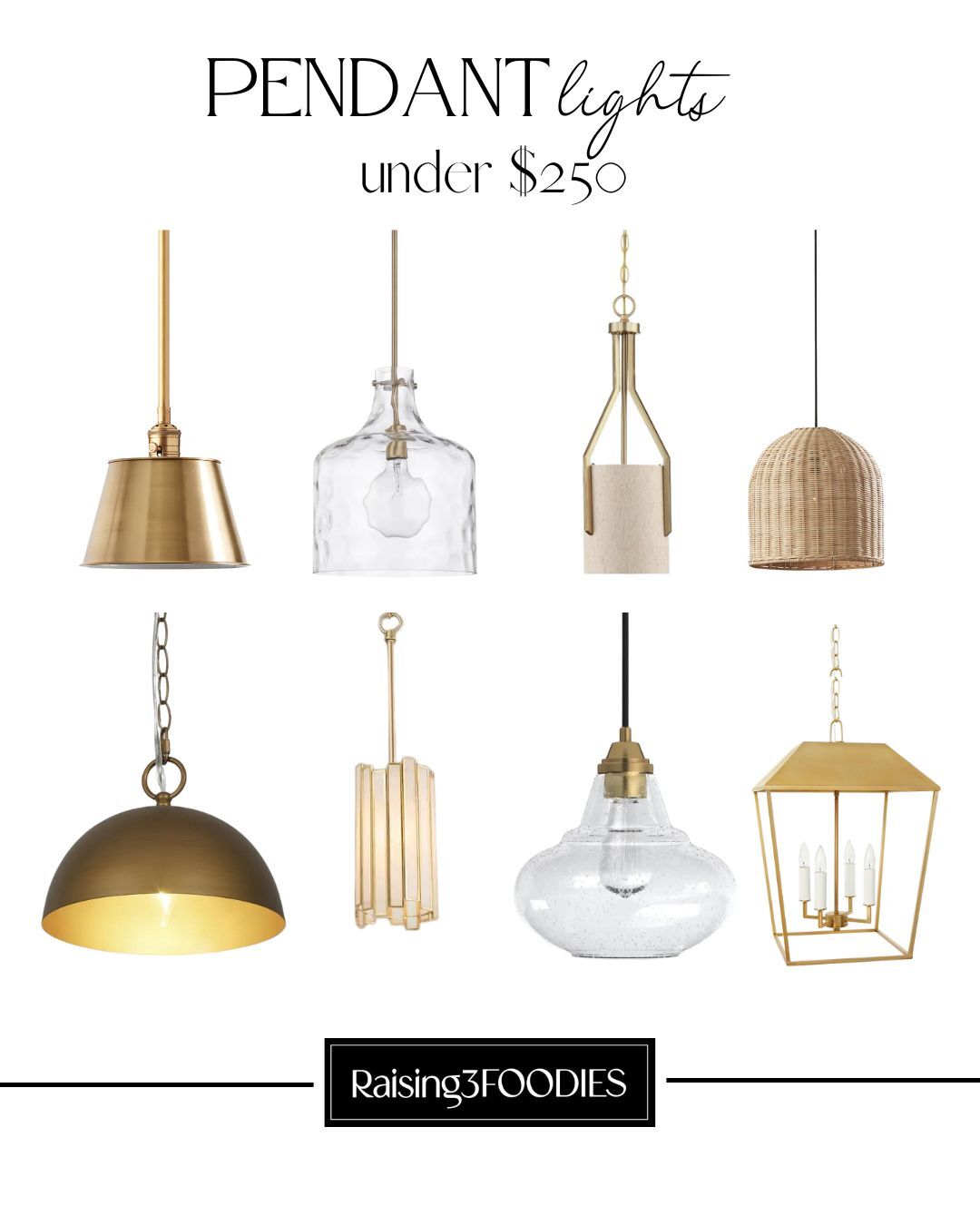
With most anything, there are many, many different styles of pendants to choose from. When you’re deciding on what style to choose for your kitchen pendants, you have to look at your overall aesthetic of your kitchen. Is it more farmhouse, modern, midcentury or somewhere in between? Because you’ll most likely have at least two pendants over your island, it’s best to stick with a minimalistic design, so you’re not overpowering the whole look of the kitchen.

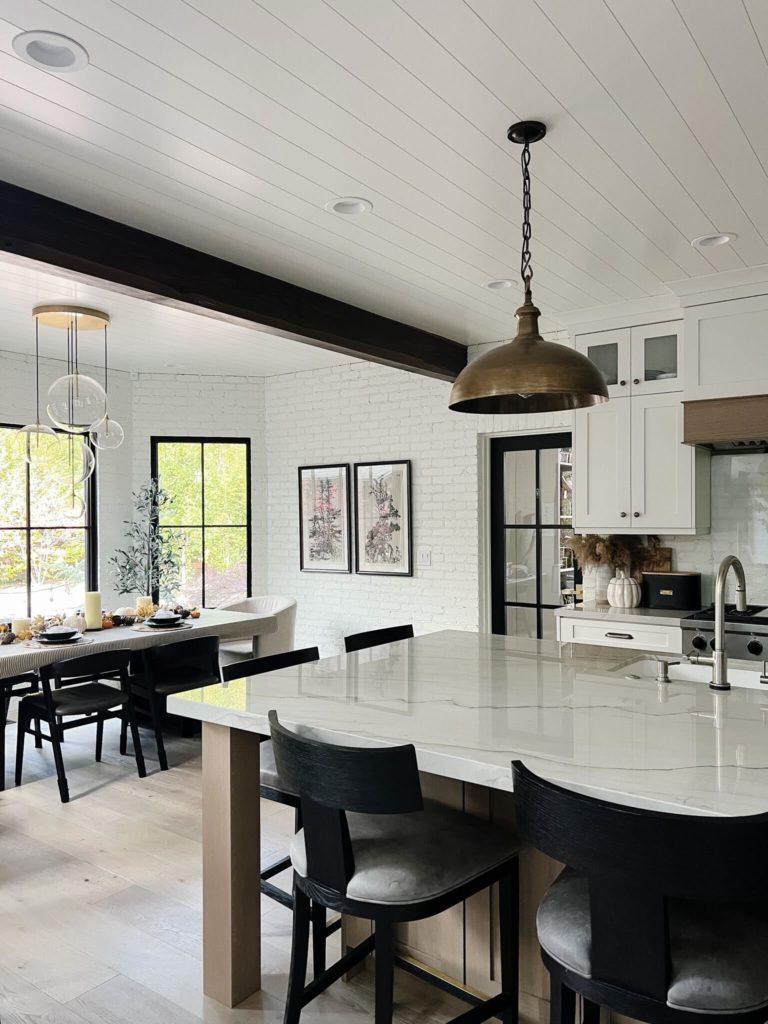
When choosing a pendant, you also want the island pendants to look cohesive with the rest of the lighting fixtures used in the kitchen and dining area. If your living room is open to the kitchen, you also want the living room fixtures to flow with the kitchen.

We stuck with a more classic dome-shaped pendant for our kitchen, and love the way they look. Because our kitchen as a lot of light colors, we decided on brass for the pendants to warm up the space.

How Much Light Do You Need

Though you want to be mindful of your pendant’s style, you also want to consider how much light the pendant will give your kitchen. Do these pendants need to provide a good amount of light throughout the entire kitchen? Or do you just need these pendants to brighten up the island itself with more focused lighting?

Opal or Linen Shades

Opal shades are made of glass but have a white cast over the entire light to tone down the level of brightness it provides. So though it provides a consistent brightness for the whole kitchen, it won’t be as bright as if it wear clear glass.

Linen shades are great to use if you love a cozy feel to the space. Much like a lamp on your side table, this provides a similar lighting experience that the opal shade provides – all-over lighting, but not as bright as a clear shade.

Clear Shades

Clear shades give the most consistent and brightest level of lighting for your kitchen. If there isn’t much lighting anywhere else throughout the space or you prefer the island to be the main source of lighting, then I would suggest using a clear or hammered clear glass shade.

Metal Shades

A metal shade is a light that provides concentrated lighting on your island. Because metal is opaque, it doesn’t provide much lighting throughout the space. However, it’s a perfect option if you’re doing a lot of cooking or other activities like homework etc. on the island daily.
pendant lighting under $250

Shop the Post

pendant lighting under $100

Shop the Post

What type of shade do you prefer? Let me know below in the comments!

Pendant Lighting Shop

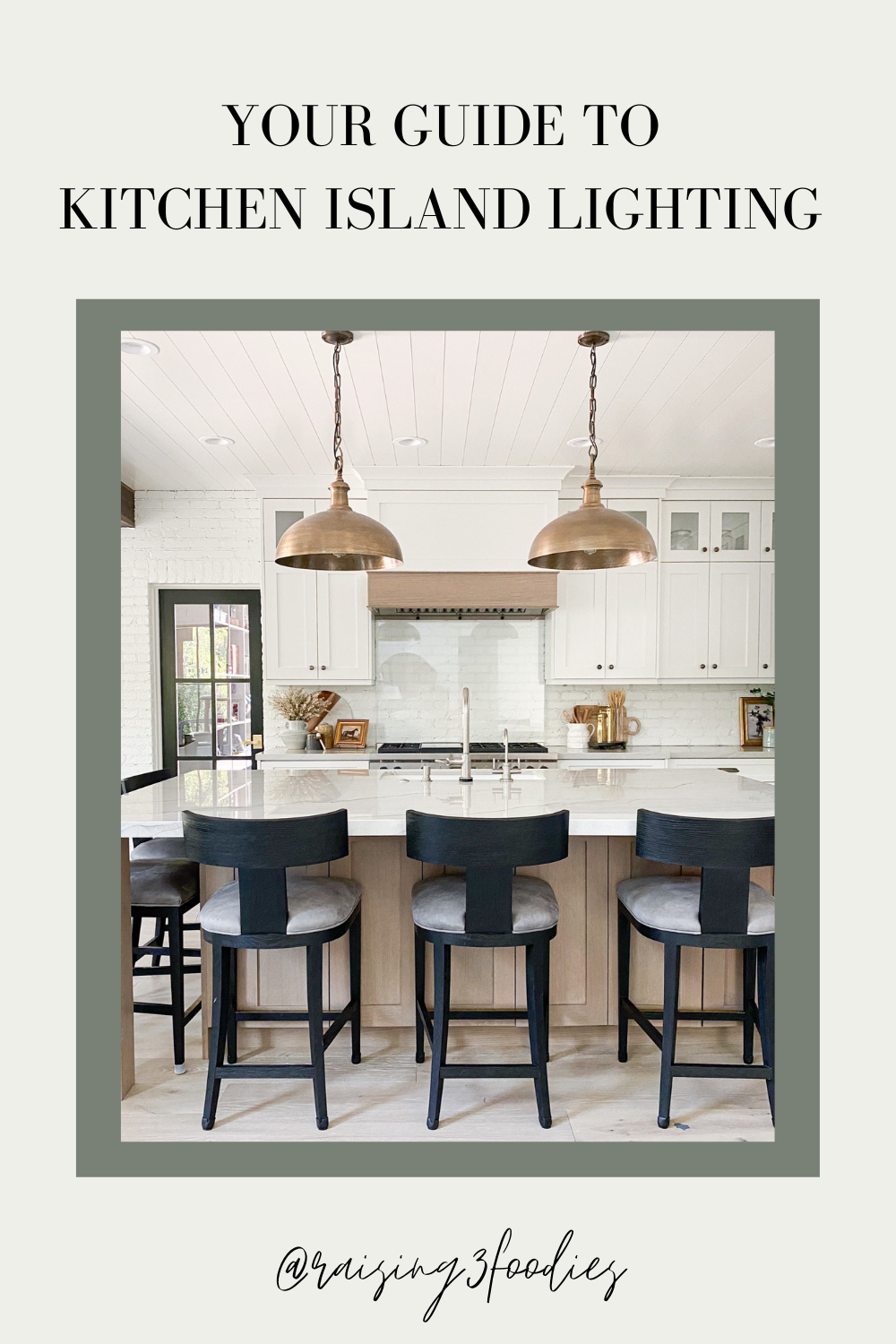
Pin this Photo and Refer Back to the Post Later
your guide to kitchen island lighting


Shop the Post
Dining Room

Dining Room Light Fixtures

The dining room is an important part of any home. It’s a place we gather with loved ones to enjoy good food and conversation, while unplugged from the busyness of the outside world. Whether it’s catching up on the days activities over dinner, family game night, or entertaining friends, it’s truly the heartbeat of every home. While lighting has the unique ability to add warmth and coziness to this space, it’s often overlooked, so today, I’m breaking down all things dining room light fixtures! Helping you create a beautiful dining ambiance memories are made of!

Dining room light fixture

Selecting Your Dining Room Light Fixtures

Dining room light fixture
Roundup of light fixtures

Shop the Post

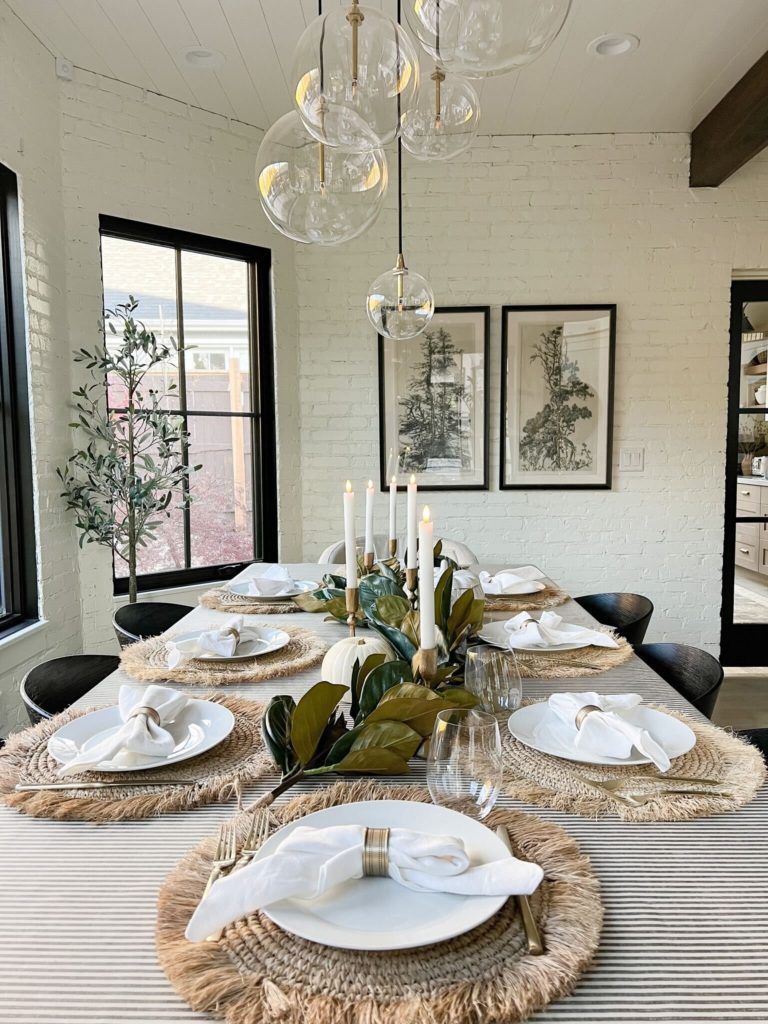
Selecting the right light fixture is an important step to creating a well-designed dining space. Not only is the light fixture a central feature of your dining room but provides an opportunity to create mood and set the overall tone. This is also the perfect place to consider a bold statement piece, which allows for slightly more adventurous options.

Dining room light fixtures come in a variety of styles, shapes and sizes. With linear, round, tiered, architectural, and pendant designs, the options are seemingly endless. To help narrow your selection, start by determining the style of light fixture you need, before trying to figure out size and proportion.

Chandeliers

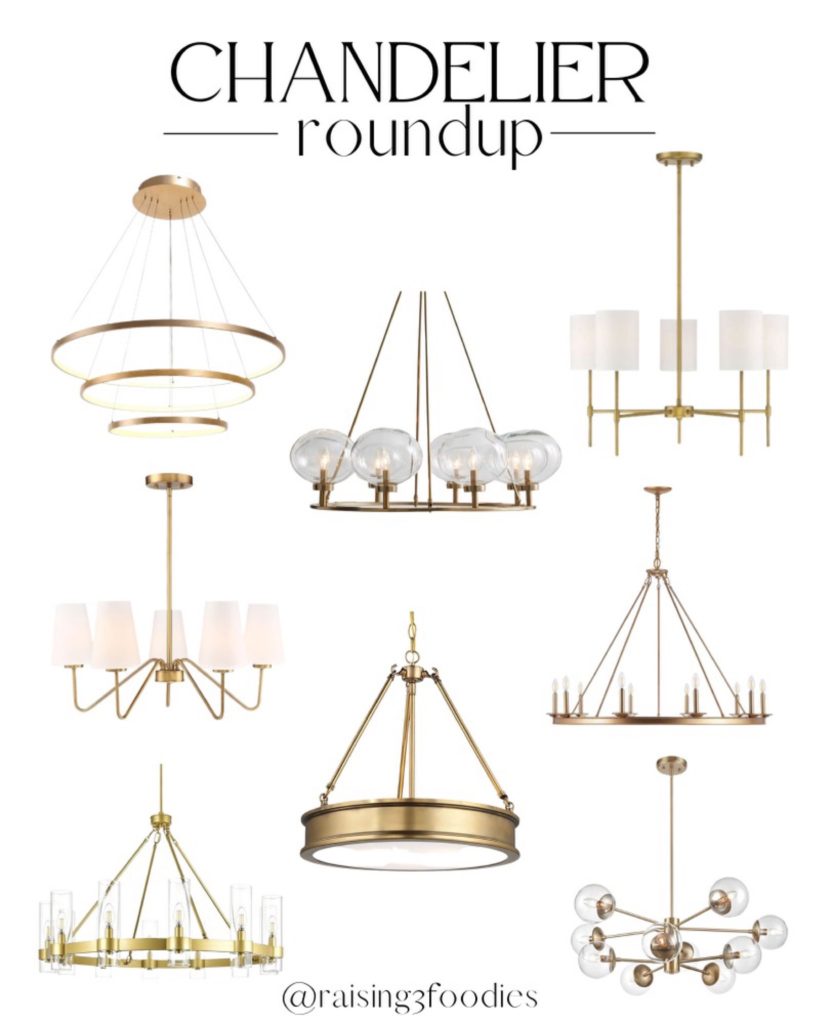
Chandeliers are timeless and tend to be the most common light fixture in dining rooms. With decorative and ornate appeal, they create a beautiful focal point that seamlessly floats above the table. Its shape allows lighting to effortlessly branch off, creating dimension; while evenly distributing soft glowing light.

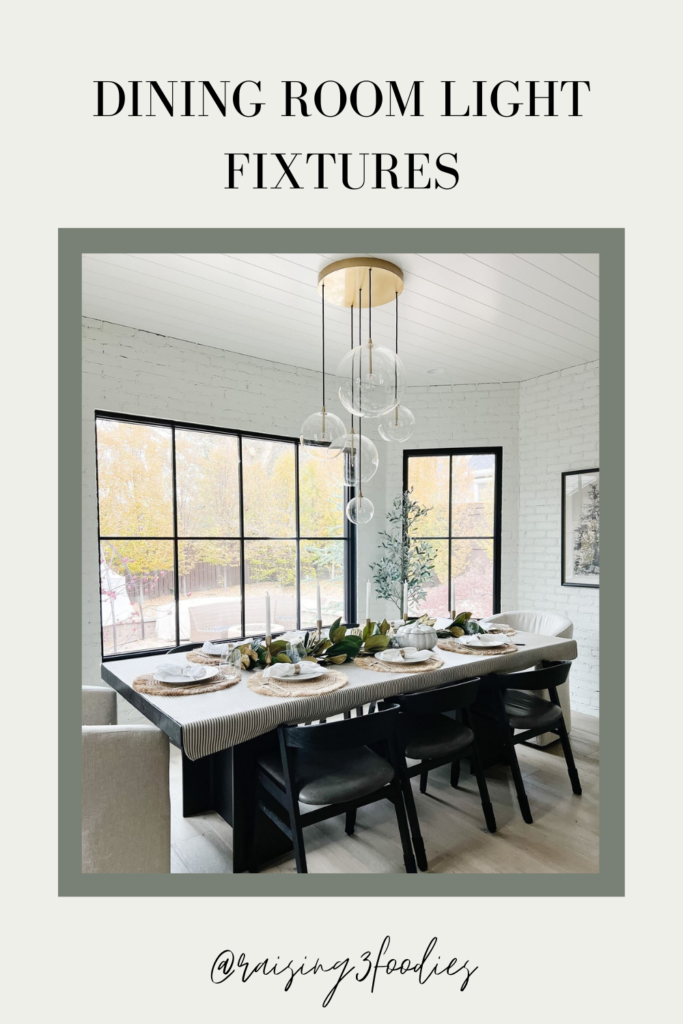
Contemporary designs like THIS Brass Five-Light Chandelier, offer a clean and simple look. While glass globe chandeliers, add a chic, modern flair, dispersing light at every angle. To elevate your space try incorporating architectural pieces like adjustable height tiered chandeliers. Offering visual appeal with its varied shape, it can be placed separately or combined to form a beautiful arc.

Shop Chandeliers

Pendant Lights

In general, pendant lighting is more sleek and simplistic. While it’s typically one light suspended by a cord, pendants can also be hung in rows or grouped in multiples, creating an artistic flare. Pendant lighting is versatile, easily adapts to any space, and adds ambient light throughout your dining area. Adding a dimmer to your dining room light fixtures will create attractive lighting, helping to set the overall tone and mood of the room.

A sleek pendant, like THIS modern antique bronze fixture from Amazon, adds a sophisticated touch to any dining room space. Shapes and styles vary from simple globes to colored drums and woven cages. They also come in a variety of materials, adding just the right amount of contrast and style.

Shop Pendants

Sizing Your Dining Room Light Fixtures

Dining room light fixture

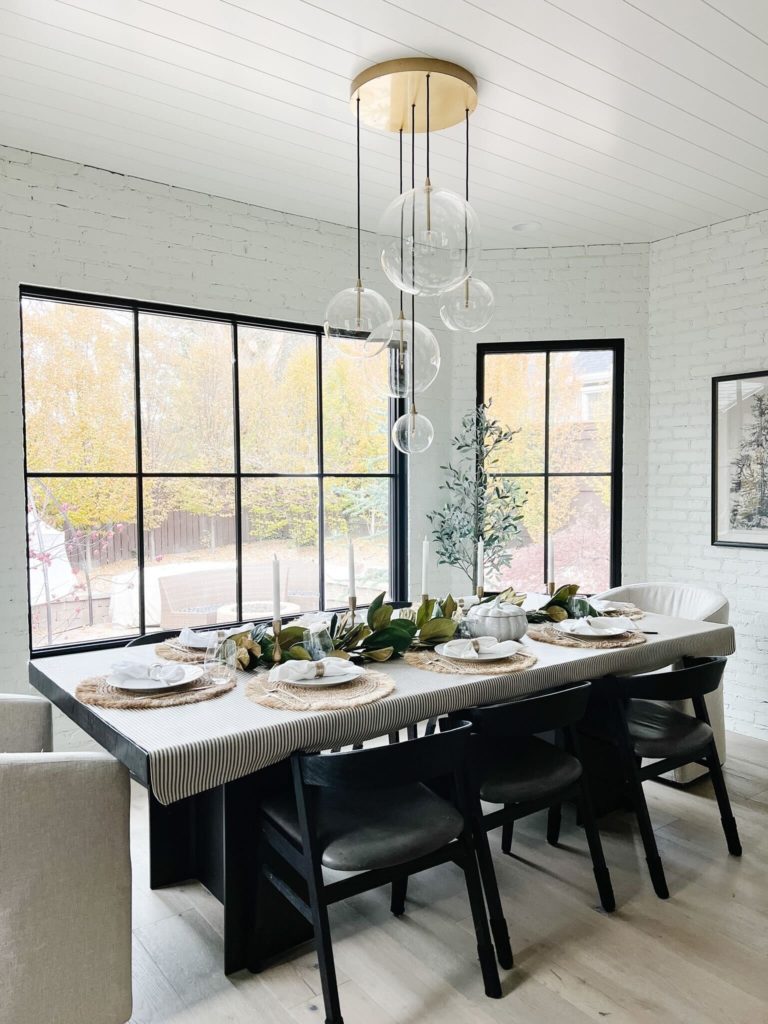
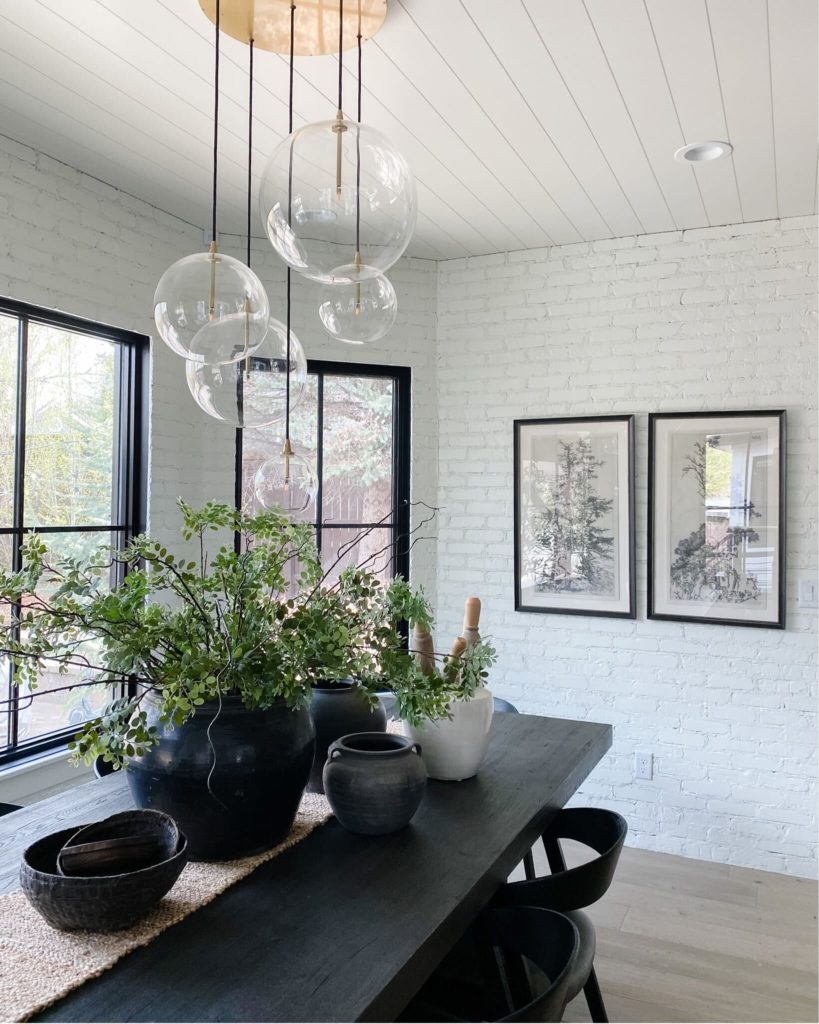
Choose a light fixture that correlates to the dining room table, not the room itself in terms of size, shape, and style. Round fixtures like chandeliers are an easy match for oval tables, and a linear fixture goes well over a rectangular table. Another option is to have multiple pendants arranged to complement the shape of the table, in a row or grouped together.

How to Size Your Fixture

When selecting the size of your dining room fixture, the general rule is one-third of the length of a rectangular or oval table. While it’s not recommended to go smaller, the larger the light fixture, the better! Just make sure to choose a fixture that is wider than the table itself.

  • Add the length and width of your room together and convert them into inches (a 10×14 room would require at least a 24-inch-wide light fixture).
  • You can also determine the right size by measuring the width of the dining table.

How to Hang Your Fixture

When hanging chandeliers and pendants over the middle of the dining table, keep the bottom of the light fixture between 30 to 36 inches from the surface of the table. It’s also important to get your light as centered as possible over your table.

  • If using pendants in a row, the length of the table will help in determining where to hang them. Space the lamps according to how long the table is.
  • Suspension lights should be anywhere from 1/3 to 2/3 of the length of the table.
  • Keep in mind suspension length when choosing a fixture.
Dining room and kitchen light fixtures

I hope these eye-catching chandeliers and dreamy pendants inspire you to find dining room light fixtures that you absolutely love! Something that not only enhances your dining room but creates the perfect space for your family to gather around!

Which light fixtures are your favorite? Let me know in the comments below!

If kitchen pendants are next on your list, check out THIS post on kitchen island lighting!

PIN THIS POST AND COME BACK TO IT LATER!
Pin this post for later

Shop the Post
This error message is only visible to WordPress admins
Error: There is no connected account for the user 17841404072974174.